
 A biography for Patrick Chamorel is coming soon.
Category: Panelists
Ronald Asmus
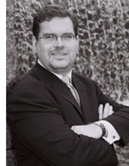
Ronald D. Asmus is Executive Director of the Transatlantic Center of the German Marshall Fund of the United States in Brussels, Belgium. He has written widely on US-European relations and is the author of Opening NATO’s Door: How the Alliance Remade Itself for a New Era (New York: Columbia University Press, 2002). He served as Deputy Assistant Secretary of State for European Affairs from 1997 to 2000. He has previously worked as a Senior Fellow at the German Marshall Fund, Council on Foreign Relations, RAND and Radio Free Europe. Dr. Asmus has been awarded the U.S. State Department’s Distinguished Honor Award; the Republic of Poland’s Commander’s Cross; the Kingdom of Sweden’s Royal Order of the Polar Star; the Republic of Lithuania’s Order of the Grand Duke Gediminas; and the Republic of Estonia’s Order of the Cross of St. Mary’s Land; and the Republic of Latvia’s Order of the Three Stars.
Dr. Daniel Hamilton
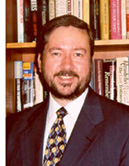 Daniel S. Hamilton is the Richard von Weizsäcker Professor and Director of the Center for Transatlantic Relations at the Paul H. Nitze School of Advanced International Studies (SAIS), Johns Hopkins University, named by Foreign Policy magazine as one of the “Top 30 Global Go-To Think Tanks” in 2009. He also serves as Executive Director of the American Consortium for EU Studies, designated by the European Commission as the EU Center of Excellence Washington, DC. He is the host of The Washington Post/Newsweek International’s online discussion feature Next Europe (www.washingtonpost.com/nexteurope) and is a consultant to Microsoft Corporation.
Dr. Hamilton leads international policy work for the Johns Hopkins-led Center for Center for the Study of High Consequence Event Preparedness and Response (PACER), named as one of 5 U.S. National Centers of Excellence by the U.S. Department of Homeland Security.
He has held a variety of senior positions in the U.S. Department of State, including Deputy Assistant Secretary for European Affairs, responsible for NATO, OSCE and transatlantic security issues; U.S. Special Coordinator for Southeast European Stabilization; Associate Director of the Policy Planning Staff; Director for Policy in the Bureau of European Affairs; and Senior Policy Advisor to the U.S. Ambassador and U.S. Embassy in Germany. In 2008 he served as the first Robert Bosch Foundation Senior Diplomatic Fellow in the German Foreign Office.
Dr. Hamilton chairs the selection committee for the Robert Bosch Stiftung Fellows program bringing young American professionals to Germany. He is a Member of the Academic Board of the Stiftung Wissenschaft und Politik (SWP) in Berlin; Member of the Board of the Körber Foundation’s USABLE awards program; Member of the Board of Advisors to the European-American Business Council and the Center for European Policy Analysis; Editorial Board Member for the Council on European Studies; the journal Biosecurity and Bioterrorism; and the Danish Foreign Policy Yearbook.
Dr. Hamilton has also taught graduate courses in U.S. foreign policy and U.S.-European relations at the Hertie School of Governance in Berlin, the University of Innsbruck and the Free University of Berlin. From 1990-1993 he was Senior Associate at the Carnegie Endowment for International Peace and from 1982-1990 Deputy Director of the Aspen Institute Berlin. In the summer months he serves as Dean of Waldsee German Language Village, the oldest and largest immersion program in North America for young people, sponsored by Concordia College in Minnesota.
Academic background: Senior Associate, Carnegie Endowment for International Peace (1990-1993); Deputy Director of the Aspen Institute Berlin1(1982-1990). Ph.D. and M.A. with distinction from Johns Hopkins SAIS; B.S.F.S Georgetown University’s School of Foreign Service.
Recent publications: Alliance Reborn: An Atlantic Compact for the 21st Century (2009) by the Washington NATO Project. Other recent publications include The Transatlantic Economy (annual editions, 2004-2009); Germany and Globalization (2009); France and Globalization (2008); Europe and Globalization (2008); The Wider Black Sea Region: Strategic, Economic and Energy Perspectives (2008); The New Eastern Europe: Ukraine, Belarus and Moldova (2007); Terrorism and International Relations (2006); and Transatlantic Homeland Security (2005).
He has been presented with Germany’s Federal Order of Merit (Bundesverdienstkreuz); France’s Palmes Academiques; Sweden’s Royal Order of the Polar Star; the Transatlantic Business Award 2006 from the American Chamber of Commerce to the European Union, and the Transatlantic Leadership Award 2007 from the European-American Business Council. He holds the State Department’s Superior Honor Award. He has a Ph.D. and M.A. with distinction from the Johns Hopkins School of Advanced International Studies and an honorary doctorate from Concordia College. He received his undergraduate degree from Georgetown University.
Catherine Fall
Catherine Fall is the former Director of Atlantic Partnership. She is half American and was educated in New York, Boston and Moscow, and later at King’s Canterbury where she was a music scholar. She went to university at St Hilda’s college, Oxford, where she read Politics, Philosophy and Economics. Her father, Sir Brian Fall, a diplomat whose career covered posts in the United States, as well as High Commissioner to Canada and Ambassador to Russia and the ex Republics of the Ex Soviet Union. He is now principal of Lady Margaret Hall, Oxford.
Catherine’s first job was working as a research assistant for Euro MP Patricia Rawlings. She then worked as the special advisor to the Deputy Director General of the Confederation of British Industry. In 1995 Catherine joined the Conservative Research Department as desk officer for Europe and agriculture. After the 1997 election, she worked for the Rt Hon Michael Howard, the then Shadow Foreign Secretary, and later became Head of Home Affairs Section, working as well for John Maples MP, Shadow Health Secretary. In 1999 Catherine became the political advisor to the MEPs for the Euro election.
Catherine is the Governor of a special needs School, Fairley House and Secretary of her local Conservative party ward. She has a two year old daughter.
George Osborne MP
 George Osborne was elected as the Member of Parliament for Tatton in June 2001. Winning with a majority of 8611, he replaced Martin Bell and became the youngest Conservative MP in the House of Commons. He has recently been promoted to the Shadow front bench Economic Affairs team.
Before this promotion George joined the Whips’ Office in June 2003. George served on the powerful Public Accounts Select Committee, the Public Accounts Commission and the Transport Select Committee. He has also fought hard to represent the interests of his Tatton constituents, and has helped secure some notable victories – including saving Knutsford Crown Court, preserving direct trains services to Wilmslow and stopping Manchester Airport changing its departure routes. George is on the Steering Group of ‘no’, the national campaign against Britain joining the single currency and he is Vice-Chairman and co-founder of North West Says No, the campaign against elected regional government in the North West. George is also Vice President of the East Cheshire Hospice, and serves on the Advisory Councils of both the Social Market Foundation think tank and New Europe, the pro-Europe anti-euro campaign organisation. In 2003 he appeared as BBC TV’s Parliamentary Doctor, taking part in a live on-air surgery with members of the public each week on BBC 2. More recently George appeared on BBC1’s Question Time, responding to the audience’s questions on the hot topics of the week.
George was born in London in May 1971. He was educated at St Paul’s School, London, and at Magdalen College, Oxford, where he read modern history. At Oxford he was a demy (scholar) and joint editor of the University magazine Isis. He was also a Dean Rusk scholar at Davidson College, North Carolina. From 1994-5 he worked in the Conservative Research Department and became Head of the Political Section. From 1995-7 he was the Special Adviser at the Ministry of Agriculture, Fisheries and Food and worked in the Political Office at 10, Downing Street. From 1997-2001 George was Political Secretary to the Leader of the Opposition and Secretary to the Shadow Cabinet. In that capacity he helped write William Hague’s speeches and prepare him for Prime Minister’s Questions.
George is married to Frances. The have two children: Luke, who was born a week after the 2001 General Election, and Liberty, who was born in June 2003. They live in London and Cheshire.